


Cookies help us deliver our services. By using our services, you agree to our use of cookies.
A complete guide to football club roles
A lot more goes into running and growing a football club than the 90 minutes spent on the pitch. There are dozens of people behind the scenes making it all work. From the coaches who shape the performances on match days to the social media managers who promote them, and the professionals handling finances and medical care - each role plays an important part in running a successful club.
Whether you’re looking for a football career or simply want to grasp how modern football works, in our guide, we’re going to completely break down the roles in a football club and how each position contributes to performance, culture, and long-term success.
What jobs are in a football club?
Depending on the size of your club, the responsibilities of each job may vary slightly. For example, larger clubs may have managers specifically for buying and handling kits and equipment for players, whereas small clubs may have their coaches handling the buying of team kits as well as setting up game plans and handling training.
Regardless of the size of the club, there are many jobs that need to be fulfilled to keep the club up and running, and below we’ve included the most common roles and responsibilities in a football club.
Players
Starting with perhaps the most well-known role of a football club. Players are the core function and the most visible representatives of its identity, values, and ambitions. Their primary role is to compete on the pitch, executing tactical instructions, maintaining physical and technical standards, and striving to achieve results for the team.
Players are expected to train consistently, look after their physical and mental well-being, and work closely with coaches, medical staff, and performance analysts to improve their game and remain available for selection. They also act as ambassadors by engaging with supporters, representing sponsors and upholding professional conduct, making their role very important for attracting both fans and business alike.
Skills needed: fitness, stamina, good communication, and quick thinking
Coaching staff
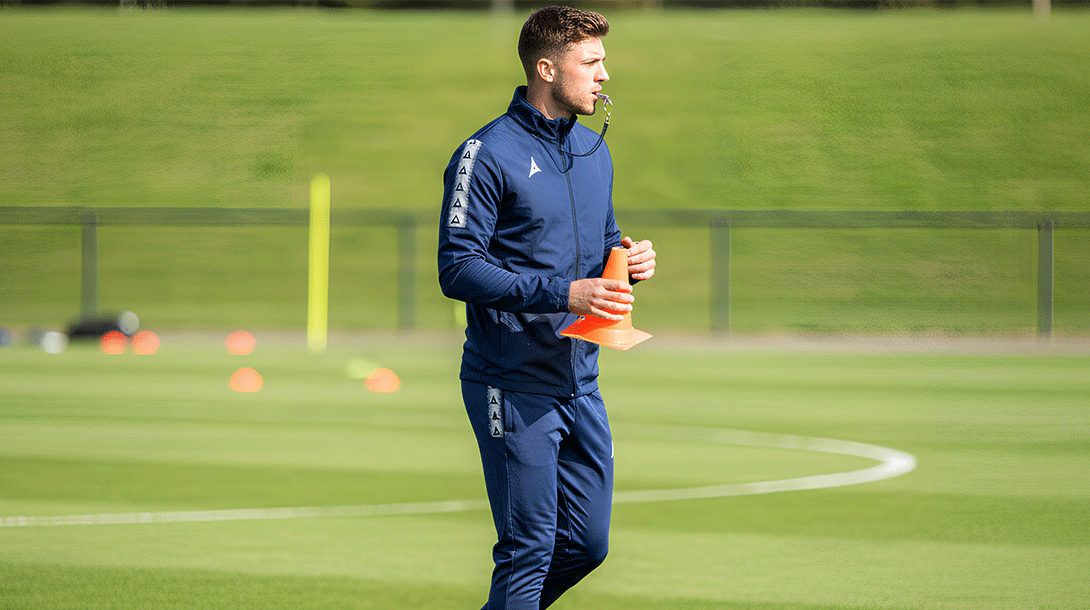
Acting as the bridge between strategic planning and player execution, coaches and managers are responsible for setting up and coordinating training sessions, developing tactical approaches, and preparing players for upcoming opponents while balancing short-term results with long-term development.
Depending on the size of the club, there may be more than one manager or coach. For example, you may find larger clubs have:
- A head coach/Manager
- Assistant coach(es)
- First-team coaches (attacking, defensive, set-piece, goalkeeping)
- Academy and youth coaches
Beyond tactics, coaching staff are also responsible for motivation, communication, and creating an environment that encourages discipline, confidence, and continuous improvement. You can learn more about how to become a football coach with our blog.
Skills needed: strong communication, leadership, tactical knowledge, organisation, management
Medical and player care officer
Medical and player care staff are essential to protecting the health, availability, and long-term well-being of footballers, ensuring that players can perform at their best throughout the season. Although important, these roles aren’t necessarily a part of the club and are often outsourced, so those looking to get into this career may need to look elsewhere, such as dedicated medical companies.
There are a few different roles and responsibilities you can find under this role, and these include:
- Club doctor(s)
- Physiotherapists
- Sports scientists
- Rehabilitation specialists
- Nutritionists/dietitians
- Psychologists/mental performance coaches
All of whom work together to prevent injuries, manage rehabilitation, and support physical and mental recovery.
Their role goes beyond treating injuries when they occur; they monitor player workloads, design conditioning and recovery programs, advise on nutrition and lifestyle choices, and provide support during the pressures of professional football. By working closely with coaches and performance staff, medical and player care professionals help balance performance demands with player welfare, making them a vital part of a modern football club’s structure.
Skills needed: medical knowledge, injury assessment knowledge, player welfare awareness, good communication, and confidentiality.
Club treasurer
A club treasurer ensures the financial health and stability of a football club, overseeing all aspects of money management and fiscal planning.
Their responsibilities include:
- Planning the annual budget
- Monitoring income and expenditures
- Preparing financial reports
- Ensuring the club is operating within its means
- Organising player insurance and licensing, and direct debits
- Keeping invoices and receipts
- Making sure purchases are signed off and tracked
They work closely with executives, accountants, and department heads to manage salaries, transfer fees, operational costs, and revenue streams such as ticket sales, sponsorships, and merchandising. Beyond day-to-day finances, the treasurer is also involved in strategic financial decisions, helping the club invest wisely, comply with regulations, and maintain transparency and accountability.
By keeping the club financially sound, the treasurer enables managers, coaches, and players to focus on performance without worrying about monetary constraints.
Skills needed: financial management, strong mathematics, attention to detail, planning and forecasting, organisation, record keeping.
Marketing and sales
A marketing team will build a football club’s brand, engage supporters, and drive revenue through creative promotion and communication strategies. They are responsible for developing campaigns that increase fan loyalty, attract new audiences, and enhance the club’s visibility both locally and globally. This includes:
- Managing social media channels
- Producing content such as videos and graphics
- Coordinating merchandise launches
- Promoting ticket sales and events.
Marketing staff also work closely with sponsorship teams to create partnerships that benefit both the club and its partners, while ensuring the club’s image remains consistent and appealing. By connecting the club with fans, media, and the wider community, the marketing department not only strengthens the club’s reputation but also plays a key role in generating the financial support necessary for success on and off the pitch.
Skills needed: strong communication, social media knowledge, creativity, graphic design, videography and photography, sales knowledge, customer relationship management, and data awareness.
Chairman
The chairman is one of the most influential figures in a football club, providing strategic leadership and overseeing the club's overall direction. Often acting as the link between the club’s ownership, board, and management, the chairman ensures that long-term goals are clearly defined and that the club operates in a sustainable and professional manner.
Their responsibilities include approving major financial decisions, supporting recruitment strategies, guiding high-level club policies, and representing the club in meetings with league authorities, sponsors, and other stakeholders. While they may not be involved in day-to-day coaching or operations, the chairman’s vision, decision-making, and leadership set the tone for the club’s culture and ambitions.
Skills needed: leadership, strong decision making, strong communication, financial awareness, negotiation skills, problem solving, networking and relationship building
Secretary
Responsible for managing correspondence, maintaining official records, and ensuring compliance with league rules and regulations, the secretary helps the club operate smoothly behind the scenes. They organise meetings, handle player registrations, and liaise with governing bodies, sponsors, and other clubs.
Additionally, the secretary often supports executives and management with documentation, contracts, and scheduling, making them an indispensable link between the board, staff, players, and external organisations.
Skills needed: time management, attention to detail, organisation, communication, record keeping, knowledge of rules and regulations.
How to fill job roles as a small club?
All jobs and roles are essential to the success of a club; however, for small clubs, finding the money and people to fulfil individual roles isn’t always easy. The great thing about small clubs is their sense of community. Use the community to your advantage and find volunteers to help out. Parents, supporters or even those looking for work experience are all great candidates for club volunteers. For example, many parents of youth clubs tend to fill roles such as treasurer, fundraising events organiser, or secretary, and often the kids themselves are keen to take up social media marketing for the club. This way, you can fulfil roles without all the money worries.
You can also show volunteers you appreciate their help in other ways, such as free tickets to games, food and drink discounts, or a simple appreciation post.
Find the perfect football career with Avec Sport
Football clubs are intricate organisations built on the collective efforts of many individuals, each contributing expertise, dedication, and professionalism to a shared goal. While players and coaches may be the most visible figures, the success and sustainability of a club depend just as heavily on the work of executives, medical teams, analysts, administrators, marketers, and support staff who operate behind the scenes.
If you’re looking to start your own football club, then you can learn more with our blogs on how to choose a football kit for your club and how to pick the right football for your club to get started. Or if you want to learn more about how to get a career in football, with our guide.